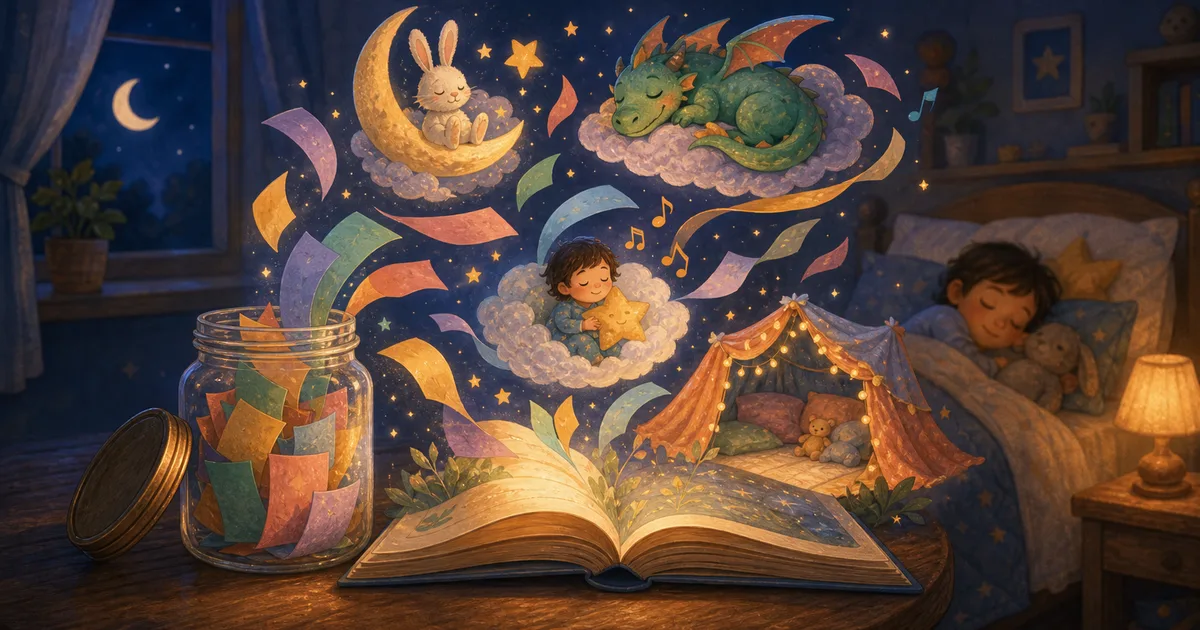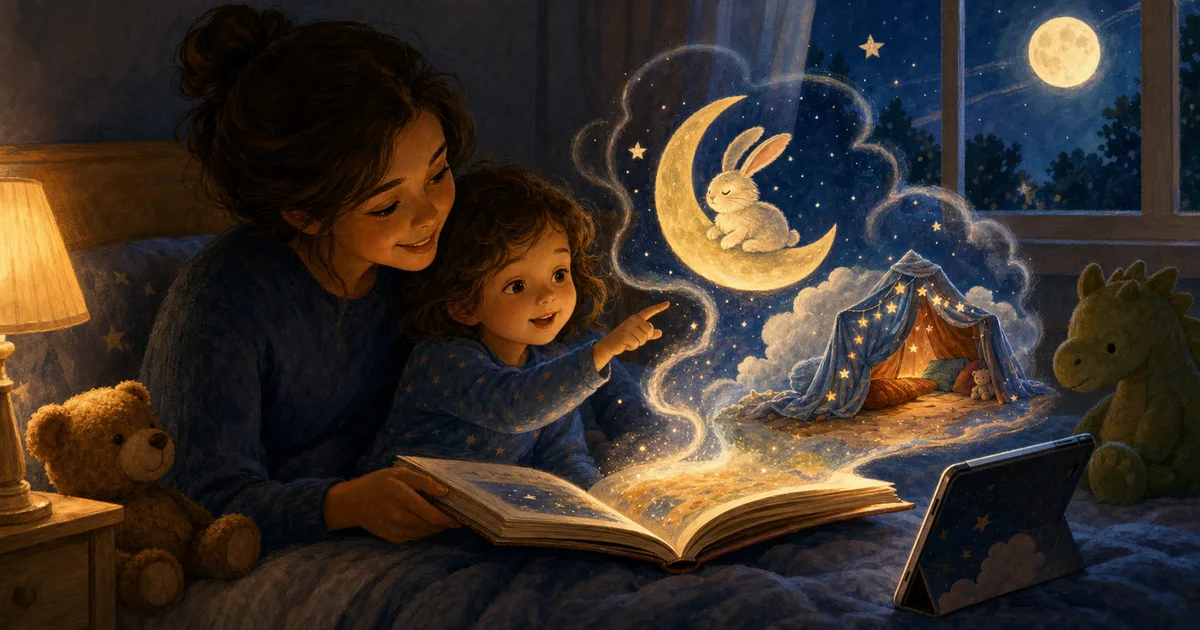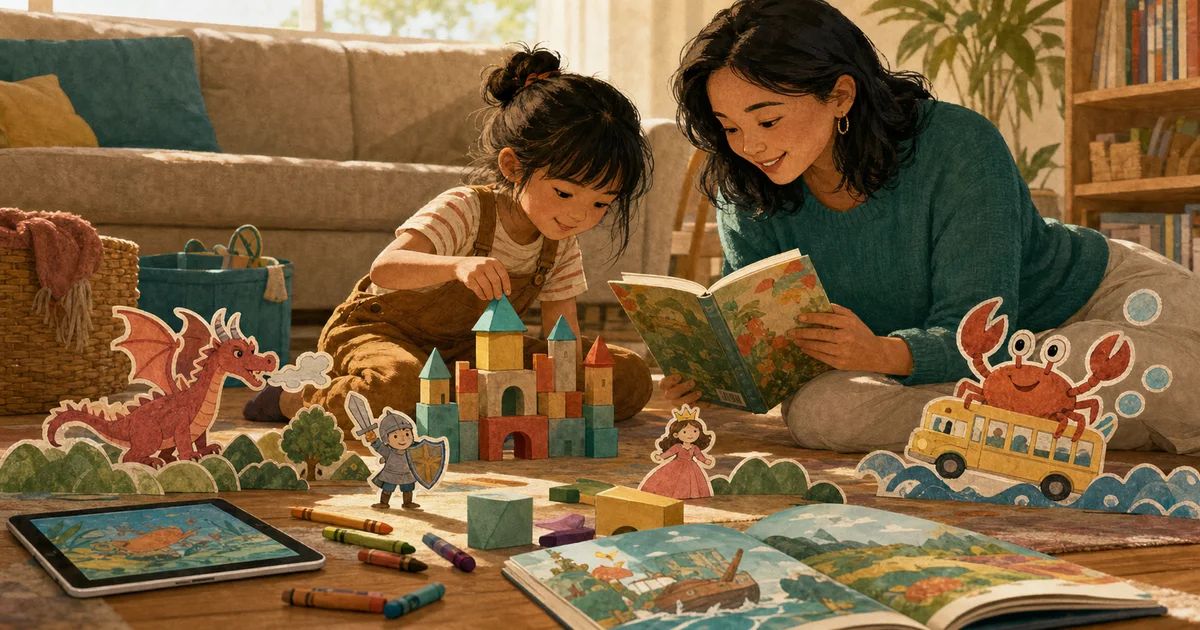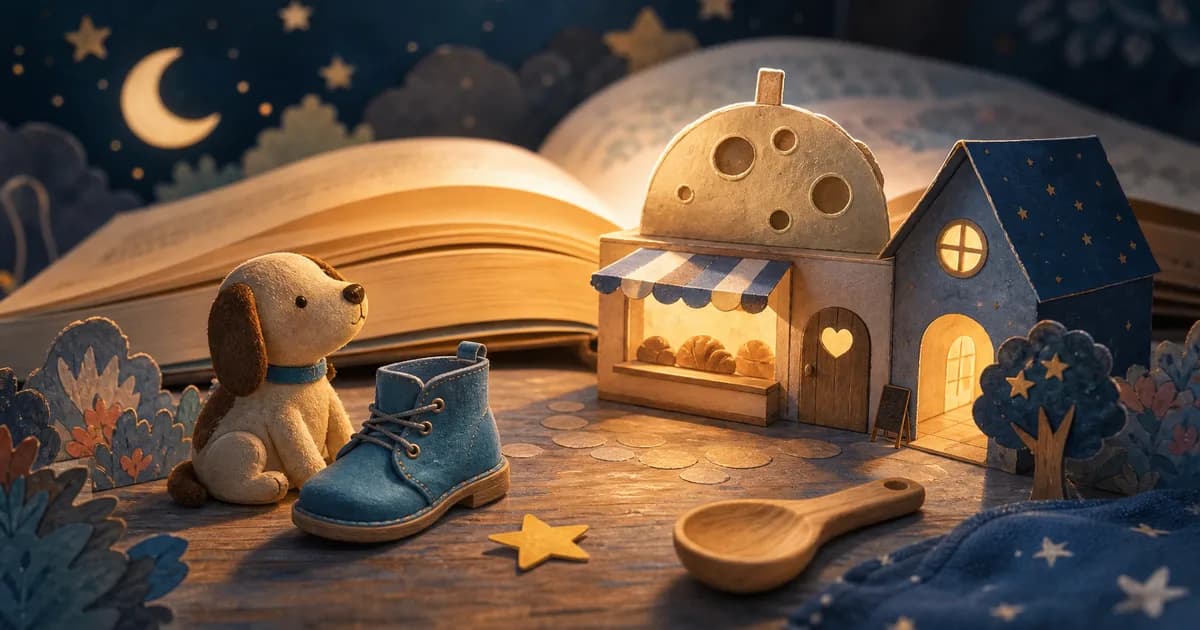
Personalized bedtime stories for kids work best when the details feel like they came from the child.
Not just a name dropped into a sentence.
The real spark is smaller and stranger: the blue rain boots, the moon bakery, the dragon who is scared of butterflies, the family dog who suddenly becomes a detective.
Those details matter because children notice them. When a story remembers the thing they invented, the page feels less like something handed to them and more like something they helped make.
Quick take
Personalized bedtime stories can help reading feel more inviting because the story starts with your child's own imagination.
Storybox lets children speak a prompt out loud and turns it into an illustrated story families can read together, save, and revisit.
Personalization is more than a name
Many "personalized" stories begin by adding a child's name.
That can be sweet, but it is only one kind of personalization. Kids often care more about the world of the story:
- What animal is in it?
- Is the castle made of toast?
- Does the robot have a tiny suitcase?
- Can the same character come back tomorrow?
Storybox is built around those child-made details. A prompt can include a favorite animal, a joke from dinner, a place your child imagined, or a problem that only makes sense in your house.
That is where the story starts to feel personal.
Why personal stories can make bedtime easier
Bedtime asks children to slow down. That is not always their favorite request.
A personalized story can help because it gives them a reason to lean in. They want to see what happened to their idea. They want to know whether the racetrack on Mars survived the spaghetti storm. They want to show someone else because the story feels like theirs.
We avoid promising that any app will make bedtime effortless. Children are children. Some nights are just loud.
But a story your child helped create can make the first page easier to open.
How to make a better bedtime prompt
The best prompt is specific, but not complicated.
Try this:
"A [character] in a [place] who has a [small problem]."
Examples:
- A kitten in a blanket fort who loses the moon
- A pirate at a pancake restaurant who cannot find the syrup
- A tiny wizard on a school bus who accidentally turns seats into jelly
Small problems are usually better than big ones at bedtime. They leave room for humor, surprise, and a gentle ending.
Saving favorites matters
Children often ask for the same story again and again.
That is not a failure of variety. It is part of how many kids enjoy stories. Familiar pages can feel comforting, especially at night.
Storybox saves stories so families can return to favorites. A personalized bedtime story does not have to vanish after one reading. It can become the one your child asks for again because they remember inventing the first idea.
If you want a broader parent guide, read personalized stories for kids next. It explains which details work best, which details to use carefully, and how to keep a story specific without making the prompt complicated.
If you want to see how this fits the app, visit our page on personalized bedtime stories, explore how to create your own stories, or read our post introducing Storybox as a kids story app.
Try this tonight
Ask your child:
"What is one tiny detail that must be in tonight's story?"
Maybe it is a purple hat. Maybe it is a soup volcano. Maybe it is their favorite stuffed animal.
Use that detail. Let it matter.
The story will feel more like theirs before the first page even begins.