Let imagination lead
The story does not need a preset universe. Your child's oddest idea can be the best starting point.
Space stories
A moon bakery, a lost satellite, or a very small astronaut can become the first sentence. Your child supplies the universe, and Storybox turns it into illustrated pages.
The story does not need a preset universe. Your child's oddest idea can be the best starting point.
A mission, missing object, or strange signal gives the adventure somewhere to go.
The finished story gives a big idea a beginning, middle, and end you can share together.
Each of these started as one idea said out loud. They are free to read, with a picture on every page and a button that reads them aloud.
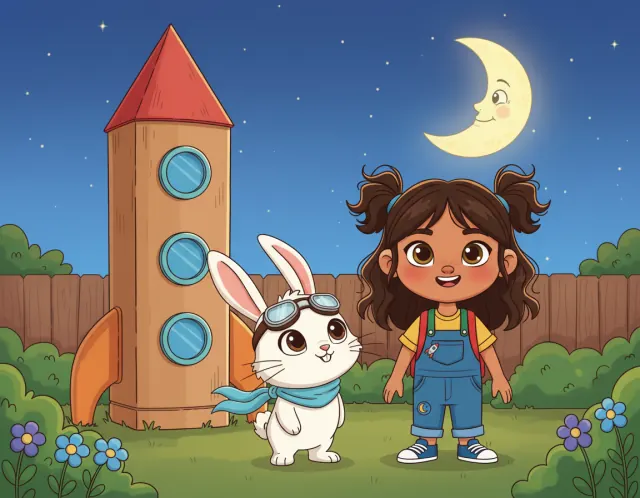
Ravi the bunny wishes he could fly to the moon, so his friend Aisha helps him build a cardboard rocket.
Ages 4 to 6 4 min read
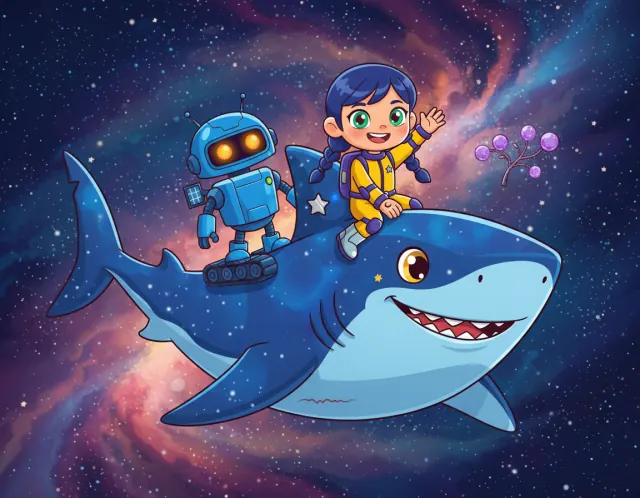
Kaito the space shark is missing his favorite treat, so Anya and her robot Bolt swim with him past nebulas and asteroids to find it.
Ages 4 to 6 4 min read
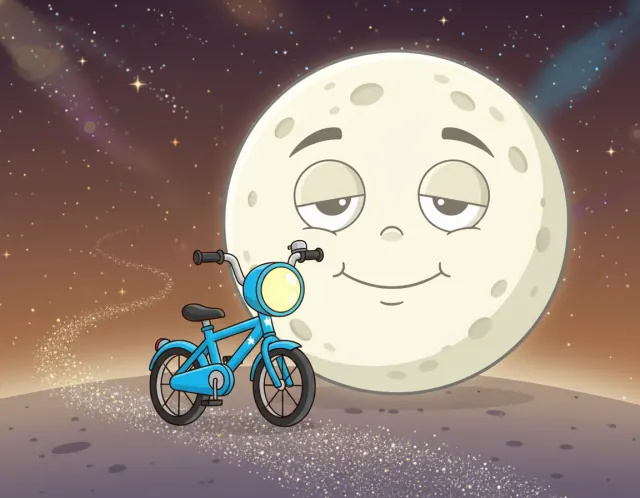
Zip the blue bicycle looks up at the moon every night, and one night a sparkle path appears that leads all the way there.
Ages 4 to 6 3 min read
Storybox keeps the flow simple so families can spend more time reading and less time managing screens.
A moon base, comet, alien garden, or planet that has not been named yet.
Your child decides what the character needs to find, fix, help, or understand.
The illustrated story turns the made-up universe into something the family can revisit.
A single strange rule can make the whole universe feel like your child's.
A companion makes a huge setting feel more personal.
Weather, food, sounds, and colors are often more interesting than a list of planets.
Yes. Choose a planet, mission, character, creature, or space mystery and start there.
It can mix imagination with learning ideas, while adults should check important factual claims.
Yes. Space stories work just as well with silly problems as with heroic missions.
Yes. Saved stories make it easy to return to favorite characters and settings.