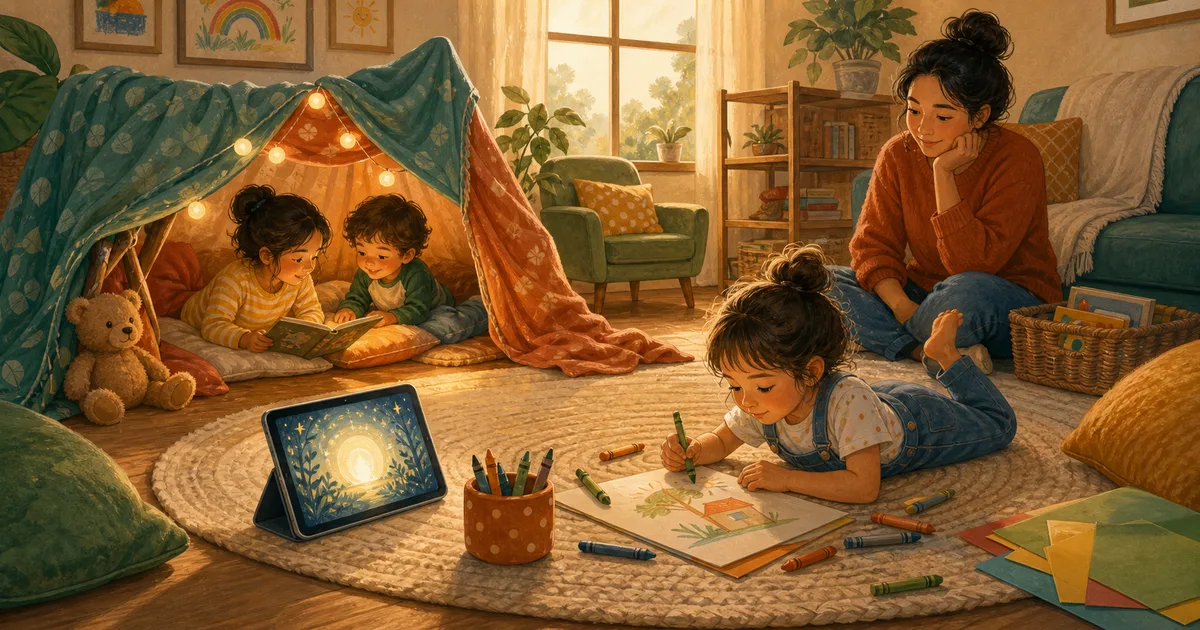
Positive screen time for kids is not about pretending every app is wonderful.
It is also not about making parents feel guilty for needing the tablet during dinner prep, travel days, sick days, or the twenty minutes when everyone needs a reset.
A better question is simpler: what is the screen helping your child do? If it helps them create, read, talk, laugh with you, or practice a skill in a calm way, it can feel very different from a feed that never ends.
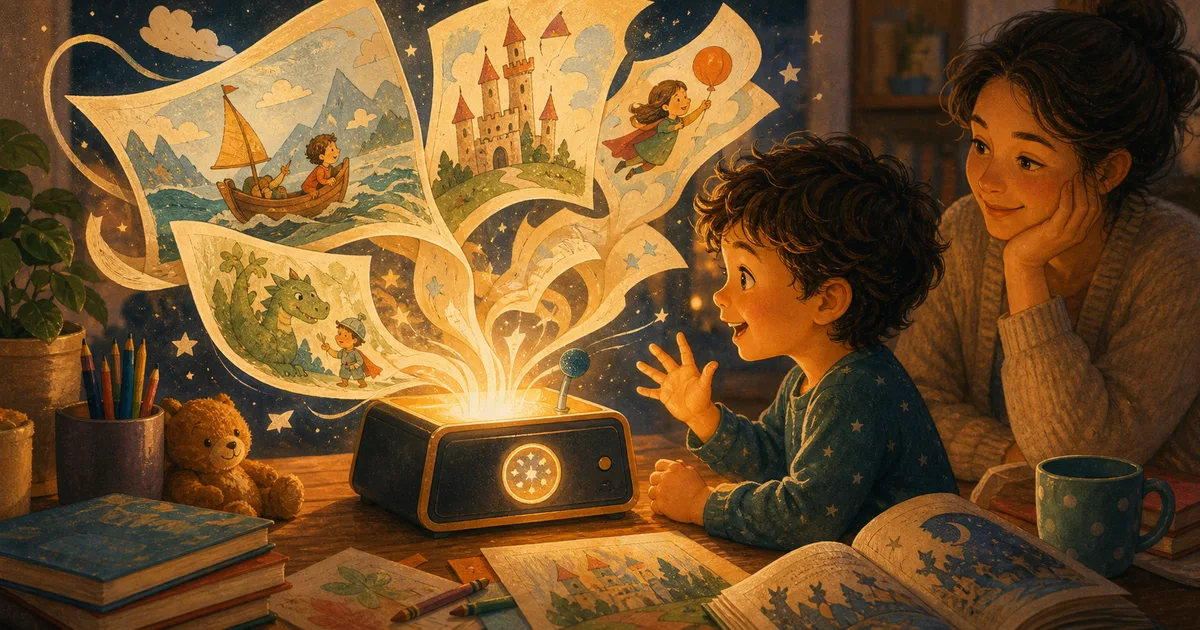
Storybox is built around that difference. A child starts with an idea, the app turns it into an illustrated story, and the screen leads back to reading together.
If you are comparing story tools, our AI story generator for kids parent guide walks through what to look for before adding one to your family routine.
Quick take
Positive screen time usually has a few things in common:
- A child is active, not only watching
- A grown-up can join or talk about what happened
- There is a natural stopping point
- The experience connects back to play, reading, or conversation
No single app makes screen time "good" by itself. The shape of the moment matters.
What parents usually mean by positive screen time
Most parents are not looking for perfect screen time. They are looking for screen time that does not leave the whole room feeling worse.
That might mean a video call with Grandma. It might mean drawing. It might mean a phonics game recommended by a teacher. It might mean a story app that gives your child something to read back with you.
The American Academy of Pediatrics' HealthyChildren.org encourages families to guide media use and make thoughtful media plans. Co-viewing can give parents a natural way to understand what children are seeing and help them make sense of it.
That idea matters for Storybox because the finished story is meant to be shared. It gives you something concrete to ask about:
"Why did the penguin choose that?"
"Should we make another story with the same character?"
"Can we read this one to Grandpa?"
Why endless feeds feel different
Endless content is hard for kids because it does not ask them to stop. One clip becomes another. One tap becomes another. The next thing is always waiting.
That can be hard for parents too. It turns a simple "ten minutes" into a debate with no obvious ending.
Stories have a better shape for families. They begin. Something happens. They end.
That ending is useful. It gives you a natural place to say, "That was our story for now," without feeling like you are cutting off a stream that was designed to keep moving.
How Storybox makes screen time more creative
Storybox begins with your child's idea.
Not a recommendation engine. Not a feed. Not a menu full of characters someone else chose for them.
A child's prompt might be tiny:
- "A cat who lives in a teacup"
- "A robot who gets stage fright"
- "A dinosaur who wants to be a dentist"
Storybox turns that prompt into a short illustrated story. The screen is still there, but the job of the screen changes. It becomes a tool for making something your family can read, save, and talk about.
That is why we talk about positive screen time carefully. We do not mean more screen time. We mean screen time with a better job.
A few questions to ask before choosing an app
When you are deciding whether a kids app fits your family, try these questions:
| Parent question | Why it matters |
|---|---|
| Can my child make something? | Creation usually feels different from passive watching. |
| Can I join in easily? | Shared attention helps screen time become a family moment. |
| Does it have an ending? | End points make transitions easier. |
| Does it connect to life off-screen? | A good app can spark drawing, pretend play, reading, or conversation later. |
Storybox was designed to answer yes to those questions as often as possible.
For a closer look at the reading side, see reading apps for kids that still feel like reading.
Try this after the screen turns off
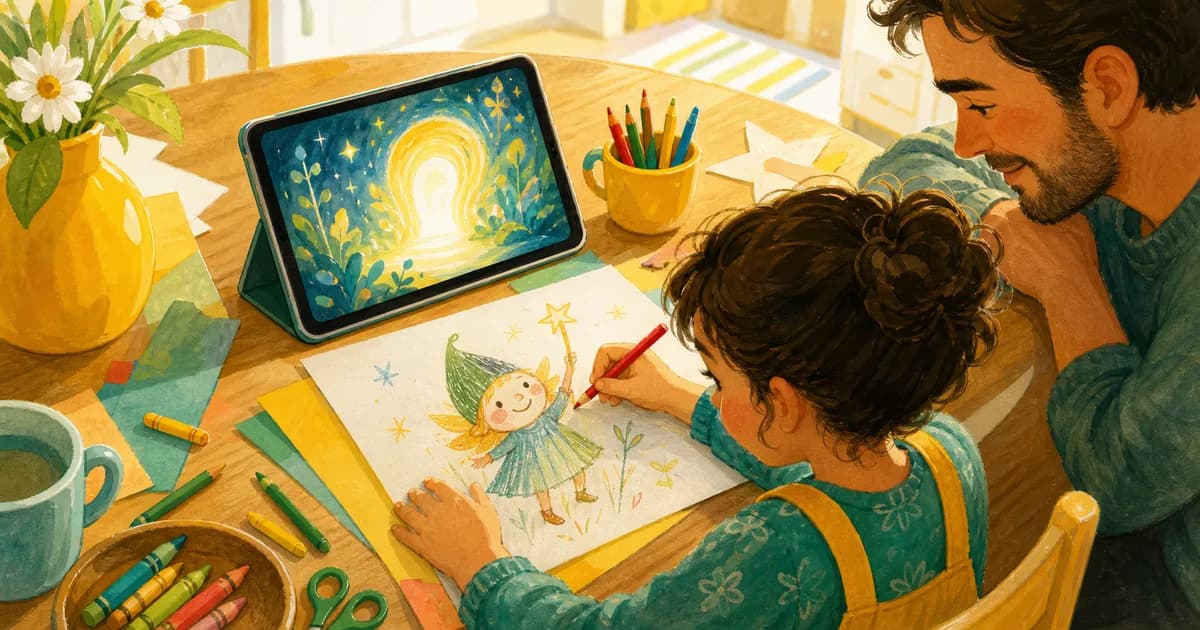
After your child reads a Storybox story, ask them to act out one page with toys, draw the next scene, or tell you what should happen tomorrow.
That little follow-up is where positive screen time becomes more than a phrase. The screen helped begin the story. Your child keeps it going.